WallWizard motorized HDTV mounts get control app for iPhone and iPad

WallWizard has a bunch of different mount styles and you can get them in motorized or manual adjustable versions. The motorized mounts are cool because you can move the TV for the best viewing angles no matter where you are sitting in the room without having to walk across the room to move the thing by hand.

This is default featured post 2 title

Go to Blogger edit html and find these sentences.Now replace these sentences with your own descriptions.This theme is Bloggerized by Lasantha Bandara - Premiumbloggertemplates.com.

This is default featured post 3 title

Go to Blogger edit html and find these sentences.Now replace these sentences with your own descriptions.This theme is Bloggerized by Lasantha Bandara - Premiumbloggertemplates.com.

This is default featured post 4 title

Go to Blogger edit html and find these sentences.Now replace these sentences with your own descriptions.This theme is Bloggerized by Lasantha Bandara - Premiumbloggertemplates.com.

This is default featured post 5 title

Go to Blogger edit html and find these sentences.Now replace these sentences with your own descriptions.This theme is Bloggerized by Lasantha Bandara - Premiumbloggertemplates.com.

Mostrando entradas con la etiqueta MOBIEL. Mostrar todas las entradas

viernes, 21 de enero de 2011

14-year-old creates 'Bubble Ball,' iTunes' most popular free app

His name is Robert Nay, and he's an 8th grader in Spanish Fork, Utah.

But the media is fascinated by this story. In part because Nay is so young. Partly because he used a public library to do some of the work (hello, quaint factor). And, here's perhaps the most lasting piece of this, because he used a program that's designed to make app-building easy for anyone -- even non-programmers.

Then there's the fact that his app, Bubble Ball, is so freakishly popular. According to the All Things Digital blog, Nay's app -- a series of puzzles where players have to guide a ball through courses that they manipulate -- was downloaded a million times in its first two weeks.

The app debuted on December 29, the blog says, and hit the top of the iTunes chart late last week, beating out a holiday-themed version of "Angry Birds," which is the king of all the time-waster games. (The paid version of "Angry Birds", which is the one most people will know, is still on top of the paid app chart at the Apple App Store, which serves iOS devices like the iPod).

In an interview with ABC News, Nay looked like a middle schooler's version of dapper. Video clips showed him pulling books off of library shelves while wearing a blue button-up and jeans (it's an outfit Zuckerberg may want to make note of, after his slouchy fashion sense earnedhim a worst-dressed rating from Esquire magazine). He talks with that Zuckerbergian, code-is-my-first-language type of rhythm.

But, for Nay, these coding skills are new and basic. He used a program called Corona, from Ansca Mobile, to develop the app. This is part of a recent trend: Google also unveiled an app-development tool, called App Inventor, which it says will be used in middle school and high school classrooms.

The gist, proponents say, is that apps now can be developed by anyone -- just like Blogger and Tumblr let anyone author a blog, even without knowledge of the HTML coding language.

Corona's website explains the program this way:

"With Corona, you can quickly create applications in a matter of hours. No Objective-C/Cocoa required, and no C++."

All Things Digital, the Wall Street Journal blog network, offers details on Nay's background in computers and coding, which isn't deep (reminder: he's only 14):

"Although it's his first game, Nay has been into computers for some time, including Web programming and helping others with their computers. When he's not at the computer (or school) he also likes reading, especially science fiction, and playing the piano and trumpet.

"Some months back, a friend suggested that if Nay liked his iPod Touch so much, perhaps he should try his hand at programming for it. At first he tried the standard Objective-C programming tools, but found the learning curve a little steep. He tried another tool called GameSalad, but didn't like the results. In the end, he settled on the Corona tools from Ansca Mobile. Corona was easy to use, he said, and also let him write once and publish for both Apple and Android devices."

ABC echoes the fact that he struggled with the process until he found the Corona tool:

"Robert said he enjoyed creating the game, which was somewhat inspired by features of his own favorite iPod games, but it wasn't always smooth sailing. 'There were some times when I felt like, 'can people seriously do this?' It seemed impossible,' he said. 'But then there were times when things just worked and I'd be like 'maybe I can actually do this.'"

Google's App Inventor software has been compared to stacking Legos. It doesn't require coding knowledge. Corona -- check out its video demo here -- looks more complicated, and All Things Digital writes that Nay did author 4,000 lines of code to create Bubble Ball. So this isn't child's play.

That blog says Nay's mother helped her son by doing the "grown-up stuff" -- putting the app on iTunes, promoting it and drawing some of the layouts for Bubble Ball's levels. Her son did all the code, All Things Digital says.

ABC writes that Nay is being coy about his future as a developer:

"Aside from excelling at school, Robert plays the piano, mandolin and trumpet. But given the response to 'Bubble Ball,' he said he's going to be carving out more of his time to work on his next application. Robert said he'll likely charge people for his next download, but is learning quickly to be tight-lipped about his plans. When asked about his newest game, he told 'Good Morning America Weekend' just this: 'It's secret for now.'"

Meanwhile, the app is getting good reviews on iTunes, with an average rating of three stars out of five.

Some reviewers note that Nay's story factored into their decision to download Bubble Ball: "This game is pointless and stupid!!! Sooo glad I didn't pay money for this!! Only reason it has that many downloads is because a 14 year old kid made it," wrote one reviewer called Epicmetal.

Others didn't mention the 14-year-old at all, perhaps because the app's description does not advertise Nay or his youth.

"Some people might skip this because of the 'homemade' look of the graphics, but that would be a big mistake! It's not complicated, it's easy to get into, and best of all, it's a lot of fun!" wrote a reviewer listed as Jay Jennings. "Worth the download, for sure!"
Your mobile phone bill is going up


Wireless carriers are quietly hiking the prices customers pay for their mobile phone service. Three of the four major networks raised their rates or scrapped discount deals this month -- and Verizon Wireless is staying oddly silent about the terms of the data plans it will offer iPhone customers when it begins selling the phone next month.

133Email Print The rising prices are intended to help the networks offset the increased costs of delivering apps, the mobile Web and especially mobile video to a rapidly growing number of smartphones. Faster networks, additional frequencies, cell tower upgrades and other improvements are costing the industry about $50 billion a year.

"At the end of the day, wireless is a capital-intensive business, and carriers need to figure out ways to make money," said William Stofega, program director of mobile device technology and trends at research firm IDC. "We're undergoing a transition from 3G to 4G, and it's really, really important for them to have capital to make good on all their propositions."

As a result, wireless companies are passing those costs onto you. Here's the breakdown of the changes taking place with the four largest U.S. carriers.

Verizon: The nation's largest wireless carrier decided to stop offering its "New Every Two" discount to users who renew their two-year contracts with the company. The promo gives existing customers credits of $30 to $100 off the already sharply discounted price of a new phone, after they have completed at least 20 months of a two-year contract.

Anyone with a current Verizon contract is grandfathered in and will be able to use the credits they've already earned toward their next upgrade. But those signing new contracts next month -- like the anticipated wave of iPhone buyers -- won't have the discount to look forward to when they upgrade to their next phone two years from now.

Verizon's future smartphone plans are also likely to be pricier than its current unlimited-data offering.

The company hasn't yet announced pricing for the 4G-LTE phones that will be available later this year, but CEO Ivan Seidenberg has hinted that customers will have to pay more if they want to take advantage of faster speeds.

Verizon is also holding off on announcing data plan pricing for the iPhone 4, which it will start taking orders for on Feb. 3. That silence suggests that the plan's cost might be more expensive than for other Verizon (VZ, Fortune 500) smartphones.


0:00 /1:30Verizon gets iPhone - but no 4G
Citing an inside source, the Wall Street Journal reported that Verizon's iPhone 4 plan will offer unlimited data -- but the report said nothing about what Verizon will charge for it.

AT&T: Beginning Jan. 23, AT&T will make several changes to its pricing schemes for new or renewing customers, according to a source with knowledge of the company's business plans.

Like Verizon, AT&T (T, Fortune 500) is ending its additional discounts for renewing customers. But unlike its competitor, AT&T will only extend those $50 or $100 discounts through July 23, rather than letting its customers get one more pop a year or two down the road.

The company is also upping the price of adding an additional line to a family plan, increasing the activation fee by $10 to $36 per line.

The carrier will eliminate its $5-for-200 text messages plan, as well as its $15 for 1,500 messages, replacing it with a $10 for 1,000 messages plan. With a 10-cents-a-message overage charge, the new plan will cost users more if they send more than 1,100 texts a month.

AT&T declined to comment on these changes. Customers currently under contract won't be affected, but anyone altering or renewing their contract -- or starting a new one -- will be hit.

In June, AT&T became the first carrier to eliminate its unlimited data plan for mobile phones. The company slashed the prices of its data plans, but also added caps to them. Customers now have to pay an additional $10 for each gigabyte of monthly data usage that exceeds the allotted 2 GB limit.

Sprint: What was once a $10-a-month extra charge for 4G usage now applies to all of Sprint's smartphone users.

Sprint announced Tuesday that it will increase the price of its smartphone plans by $10 a month, making its cheapest plan $80. Current customers are unaffected, but starting Jan. 30, new buyers will pay the higher rate.

Sprint said the increase was necessary to meet the data demands of its customers.

"The charge will assist Sprint in offering simple and affordable unlimited plans for its customers while maintaining a wireless network able to meet the growing appetite for a richer mobile experience," Sprint said in a recent press release.

Curiously, Sprint (S, Fortune 500) denies that it charges "extra" for smartphones.

A spokeswoman noted that the required $10 per month premium data add-on "allows the user to take advantage of a richer data experience." That still sounds like "extra" to us.

T-Mobile: The last holdout in terms of raising costs, tiering prices or cutting perks is T-Mobile, which remains the cheapest of the major carriers. It doesn't charge more for its 4G service -- though many would argue that T-Mobile's 4G network isn't truly "4G."

jueves, 20 de enero de 2011

4 HP directors step down

Hewlett-Packard announced a major board of directors shuffle Thursday, with four members stepping down and five new directors joining the board.

The move comes in the wake of intense criticism and several shareholder lawsuits over how HP (HPQ, Fortune 500) dismissed former CEO Mark Hurd.

3Email Print Incumbent directors Joel Hyatt, John Joyce, Robert Ryan and Lucille Salhany will step down, and five new members will take their places on Friday, bringing the total number of board members to 13.

The five incoming members of HP's board are: Shumeet Banerji, CEO of Booz & Company; Gary Reiner, formerly of General Electric; Patricia Russo, former CEO of Alcatel-Lucent; Dominique Senequier, CEO of AXA Private Equity; and Meg Whitman, former CEO of eBay.

In an interview with CNBC immediately following the announcement, HP chairman Ray Lane insisted the shakeup was unrelated to Hurd's exit.

The long and winding Hurd scandal: Hurd resigned abruptly in August, sending shock waves through the industry. HP executives said Hurd, who is married, failed to tell the board about a "personal relationship" with Jodie Fisher, an actress who was working as a marketing contractor for the company.

Fisher later came forward and said there had been no sexual relationship, but the HP board said that Hurd violated the company's code of ethics by filing inaccurate expense account reports in an attempt to keep the relationship secret.

When Hurd left HP, he received $12 million in cash as severance and kept a large part of his stock and options.

In early September, Oracle (ORCL, Fortune 500) announced that it had hired Hurd as co-president and a member of the board of directors.

The drama continued with HP's unexpected hiring of Leo Apotheker, the former CEO of business software firm SAP, who took Hurd's place at at the helm of HP in the beginning of October.

Facebook launches mobile app for feature phones

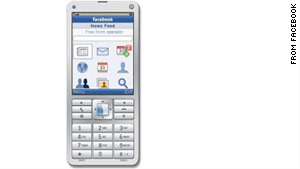
Facebook has just announced a new mobile application designed specifically for feature phones. The app will give feature phone users access to Facebook messages, events, pictures, news feeds, profiles and more.

The app gives users a better, almost smartphone-like Facebook experience that includes simple homescreen navigation, contact syncing and fast scrolling of updates and photos.

Users will be able to use the Facebook app without incurring data charges. The app is available on the following carriers in the following countries and will launch on more networks and in more areas soon:

Dialog (Sri Lanka)
Life (Ukraine)
Play (Poland)
StarhHub (Singapore)
STC (Saudi Arabia)
Three (Hong Kong)
Tunisiana (Tunisia)
Viva (Dominican Republic)

Other carriers and countries slated to be available soon are Mobilicity (Canada), Reliance (India), Telcel (Mexico), TIM (Brazil) and Vivacom (Bulgaria).

On the Facebook blog, the company's mobile program managerMark Heynen writes, "The Facebook for Feature Phones app works on more than 2,500 devices from Nokia, Sony Ericsson, LG and other manufacturers, and it was built in close cooperation with Snaptu."

Among the digerati, we tend to forget that smartphone users are not, in fact, the majority of cellphone owners. As of June 2010, feature phone owners make up a full 79 percent of all mobile phone owners. That number is even higher in countries like China and India.

As a global company with a strong presence in countries around the world -- and a strong desire to dominate in markets outside the U.S. -- Facebook has a responsibility to develop applications for all kinds of users. Other companies are still innovating in the feature phone space, and we're glad to see that Facebook is starting to keep up.

How to spend $1,000 on your Verizon iPhone without even trying

Now that Verizon is about to start selling the iPhone 4, there's a lot of buyer's remorse in the air.

Over the recent holiday season, many people purchased Android, BlackBerry, and other smartphone models from Verizon.

In an apparent attempt to ease (or perhaps capitalize on) customer grousing, Verizon is offering to reduce the cost of switching to its iPhone 4. On Tuesday, Boy Genius Report noted that Verizon's iPhone 4 FAQ page now includes this item:

Q: I just purchased a new smartphone during the holiday season, but if I knew that iPhone 4 was going to be available soon I would have waited. What are my options now?

A: Current Verizon customers who purchased and activated new smartphones, feature phones or certified pre-owned phones between Nov. 26, 2010, and Jan. 10 2011, are eligible to receive up to a $200 Visa debit card when they purchase an iPhone 4 at full retail price by Feb. 28, 2011 and return their existing phone. Note: This offer is only available on consumer accounts with five lines or less, who are purchasing iPhone 4 through Verizon Wireless retail stores, telesales, or through verizonwireless.com.

So, what's the "full retail price?" According to Verizon Wireless, iPhone 4 prices start at $200 for the 16GB model. But that's the subsidized promotional price that comes with a new two-year contract.

Farther down in the FAQ, they note that the "iPhone 4 will also be available for purchase at full retail price: $649.99 for the 16GB model, and $749.99 for the 32GB model."

That's a pretty steep price tag. I doubt many customers would think getting a $200 rebate would sufficiently offset that expense.

But for any smartphone, the cost for the device is only the beginning. Data plan costs -- and their associated terms, limitations, and extra fees -- constitute most of what users pay over the life of the phone.

So far, Verizon has not revealed prices and terms for data plans for its iPhone 4. If some of the carrier's existing plans for other smartphones are applied to the iPhone 4, then it's likely that customers already on those plans would just be able to swap their phones.

However, if you'd need to switch to a new plan in order to use the iPhone 4, it's unclear whether early termination fees would apply. These can run as high as several hundred dollars, especially for recently purchased phones.

Verizon's advanced devices page notes that its early termination fees can run up to $350. Generally, early termination fees are higher the sooner after purchase that you cancel a contract -- which would be the case for Verizon smartphones purchased over the period covered by this rebate.

You could sell your current Verizon smartphone on eBay or Craigslist, and probably get more than $200 for it. But you'd still be stuck with your existing Verizon contract, which you may or may not be able to use with a Verizon iPhone4. And Verizon's $200 trade-in rebate requires that you return your old phone. So unless you sell your current phone for well over $200, this probably wouldn't be a good deal.

So here's the bottom line:

Say you bought a Motorola Droid Pro from Verizon on Dec. 24, 2010. You paid $180 for this device after a $100 mail-in rebate (which means that right now you're probably still waiting to receive that rebate debit card, even if you remembered to file the paperwork promptly).

But you really, really want a Verizon iPhone 4. So you select a package of talk, text, and data service that, with fees and taxes, ends up costing about $110 per month for 24 months.

When Verizon's iPhone 4 comes out, you swap in your phone and wait to get your $200 rebate card. In the meantime you're $650 out of pocket on the new phone.

If you're lucky, the iPhone 4 plan will cost no more than your current plan. But if you have to cancel your old contract and get a new one, you might have to pay another $350 for early termination.

So that's $930 in total device costs, minus $300 in total rebates due, for $630 in net device costs. Plus a possible ETF penalty of $350. That brings the total potential iPhone 4 swap cost to $980. And meanwhile, you're paying $110 per month or so for service. (The economics could be better for Verizon customers with family plans.)

Bottom line is: that $200 rebate probably won't really make this switch cheap, or even affordable, for most Verizon customers. Some people will still do it, of course -- and the phone-swap rebate might be enough to nudge some people over the edge into iPhone territory.

To reduce wireless bills, some try an 'iPod phone'

His costs $40, but it can dip as low as $30 on months when he uses the phone sparingly.

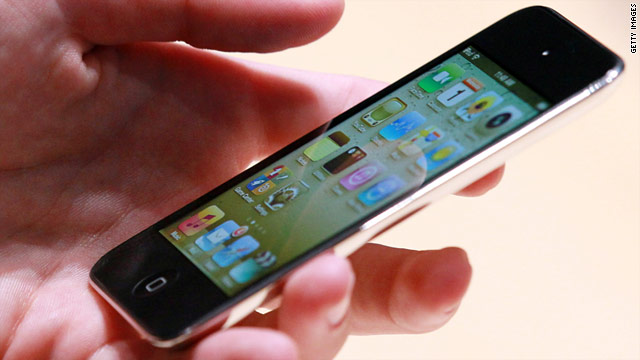
The Milwaukee, Wisconsin, man's Apple device isn't a phone, exactly. It's an iPod Touch, a touch-screen gadget that contains most of the features of an iPhone except for the earpiece and cellular chip.

Use of the iPod Touch as a makeshift smartphone is an endeavor reserved mostly for a small niche of enterprising techies. Many of them share phone-related strategies, usually involving use of Skype or Google Voice, on internet message boards.

These resourceful iPod Touch owners make calls via speakerphone or with a Bluetooth or wired headset. When home, at the office or sipping coffee at Starbucks, Stehling uses a Skype app to make calls that are crystal clear over a Wi-Fi internet connection. They are better-sounding than on most cell transmissions, he says.

When he ventures out on the street, Stehling carries a MiFi to stay connected.

A MiFi is a credit card-sized gizmo that can connect to a cellular network and translate that signal into Wi-Fi. That allows your iPod, laptop and other gadgets to get online anywhere you can get cell reception.

His device from Virgin Mobile hooks into Sprint Nextel's 3G online network and broadcasts a Wi-Fi signal so that as many as five nearby gadgets can connect.

"My iPod Touch gets notifications, so I see the incoming messages immediately," Stehling wrote in an e-mail to CNN. "It's pretty easy to stay in touch."

Stehling likes this setup because it's inexpensive and helps him avoid the two-year contracts favored by most wireless carriers. He gets most of the benefits of a smartphone for a fraction of the cost.

But this arrangement may not be for everyone. Here are some of its pros and cons.

An attractive price tag

iPod Touch owners wanting to turn it into a phone will need to pay $150 for a MiFi device, plus $40 per month for unlimited usage. But compare that with AT&T's $65 plan for minimal voice minutes, no text messages and two gigabytes of data. (Cutting data to the bare minimum can reduce that monthly cost to as low as $55.)

Over the span of a two-year contract, that adds up to about $1,110 for an iPod Touch "phone" versus about $1,560 for an iPhone with a $65 data plan. That's a savings of $450, not including Skype fees.

iPhone owners can no longer get unlimited internet access because AT&T did away with that offering last year. If you want to share your AT&T connection with a computer like you can with the MiFi, you must add $20 to your plan.

Verizon Wireless hasn't said whether it will offer an unlimited plan for the iPhone 4, or how much those subscriptions will cost when the new phone goes on sale February 10. But the prices of the carrier's other smartphone bills are comparable to AT&T's.

Verizon also offers a MiFi, which means that some adventurous people were using an Apple phone-like device on Verizon even before the announcement of the new iPhone. The MiFi 2200 costs more than Virgin's up front, but if you don't mind contracts, you can get it for $70 with a one-year commitment or free with a two-year.

Virgin Mobile's MiFi doesn't require users to sign a contract.

Cell carriers typically lock in customers, especially those buying smartphones, for two years with legal agreements, which are costly to break and help subsidize the price of the phone. The cost of the iPhone after subsidies versus an iPod Touch is similar.

But avoiding contracts is an especially attractive proposition for early adopters who feel compelled to have the latest tech toy. And that's exactly the type of person that's testing the waters with this "iPod phone."

The downsides

For one, MiFis and data-only plans don't come with phone numbers. So someone going this route generally pays Skype about $6 a month to get a phone number to attach to a Skype account.

Dialing out to other phones is an extra fee, though that can be avoided using Google's free Voice service.

The iPod Touch also lacks a text-messaging application. But Google Voice comes to the rescue again. There also is plenty of free software in Apple's App Store that mimic text-messaging functions; they're designed for excessive texters looking to dodge telecom fees.

"I prefer to have people reach me via Twitter direct messages and Facebook messages," said Stehling about his text-communication methods.

Another major obstacle is the MiFi's battery life. Wi-Fi sharing, by nature, uses a great deal of energy, even on phones. The dedicated MiFi devices can run out of juice after just two or three hours. So even though the iPod Touch's battery can last for much longer, you'll lose that portable internet connection.

Stehling resorted to juggling wall and car chargers and multiple batteries to make the situation work. As a failsafe backup, the Web-design and app-development contractor also keeps an iPhone 3G around, though he rarely uses it.

Price vs. hassle

For these reasons, this method may have trouble reaching any sort of critical mass.

"Most people don't want to have to carry multiple devices," said Phillip Redman, a wireless analyst for Gartner Research. "Most people want to have a bit more of a consistent experience."

The weak battery life on MiFis is one major stopping point, Redman said. Also, most MiFis available now are for 3G networks, at a time when phone makers are moving toward 4G.

Verizon says it will have two 4G MiFi devices by midyear, and that could help adoption of this method. But it will take three years for Verizon's 4G service to be available everywhere that its 3G coverage is now.

"The Virgin Mobile MiFi has decent speeds, but I am looking forward to 4G speeds with the MiFi devices that support it," Stehling said -- that is, "once I have the option in my area."

Stehling and others are blazing a trail that might take a long time to carve and perfect. He believes 10 or 20 years might go by before usage and costs of wireless data exceed that of voice -- the opposite of how the system works now.

But Stehling predicts it will happen eventually.

The cell phone of tomorrow?

If some major barriers can be conquered, the potential market for a cheaper cell plan is huge.

Apple sold about 10 million iPod Touch units in the past three months, a 27% increase compared with the same period in 2009. In addition to music and movie playback, many use these devices for online games, basic Web surfing and FaceTime calling over Wi-Fi.

The smartphone market is by no means threatened. Apple sold more than 16 million iPhones during that same three-month period. Smartphones make up more than a quarter of the U.S. cell phone market, according to a November Nielsen report.

But if smartphone subscription prices edge too high, the search for alternative methods could accelerate. On Tuesday, Sprint announced plans to increase the cost of all new smartphone plans by $10.

On the flip side, Sprint released the ZTE Peel in November. It's similar to a MiFi but is modeled to fit an iPod Touch. The Peel costs $80 plus $30 a month, no contract required. One other device besides the iPod can access the wireless connection.

The newest version of Google's Android operating system has an internet telephony protocol, called SIP, built in. However, few carriers have deployed this software to phones already on the market.

On the iPhone, Skype's audio and video calling app has been downloaded more than 4 million times.

Apple is not oblivious to the potential of an iPod phone either. Steve Jobs, the company's CEO, nodded to this very idea in September when unveiling the newest iPod Touch, which has two cameras for FaceTime video calling.

"A lot of people call it an iPhone without the phone," Jobs said of the iPod Touch. "It's also an iPhone without the contract."

However, even tech-savvy people can tire of trying to use an iPod Touch as a phone.

Gary Rosen, a Venice, California, creative director for online campaigns, took to blogs and message boards to research whether his iPod Touch could serve as a phone. After some experiments with the device and a MiFi, he decided against it.

Now Rosen is looking for a way to trick his old iPhone into thinking it's an iPad, using SIM cards, to switch over to AT&T's less-expensive tablet data plan.

Even Stehling plans to give up on his "iPod phone" project mission soon. He's switching to a simpler, more conventional but pricier option.

Share

Twitter Delicious Facebook Digg Stumbleupon Favorites